S.1 · P.1
Composition & General Info
Nomenclature, structure, properties and product composition.
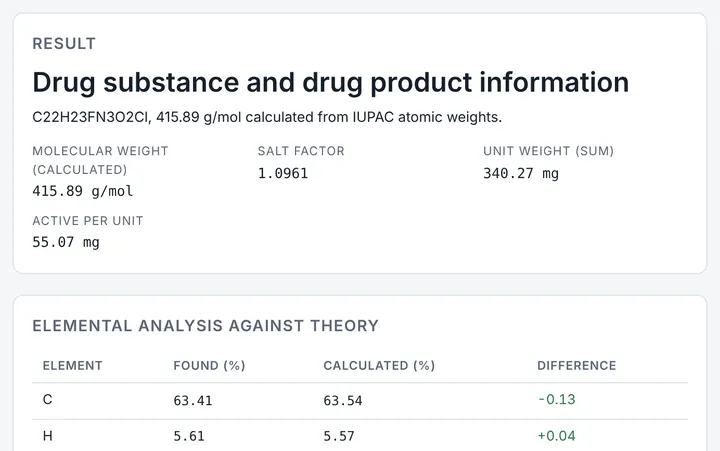
- Formula, MW and salt factor checks
- Unit weight and IID checks
- S.1, S.3.1 and P.1
Follows S.1 · S.3.1 · P.1
From nomenclature and the route of synthesis through specifications, M7 and nitrosamine risk, to shelf life under ICH Q1E. Each module checks your data against the guideline and writes the section for the US, the EU or both.
Written for small molecules
Nomenclature, structure, properties and product composition.
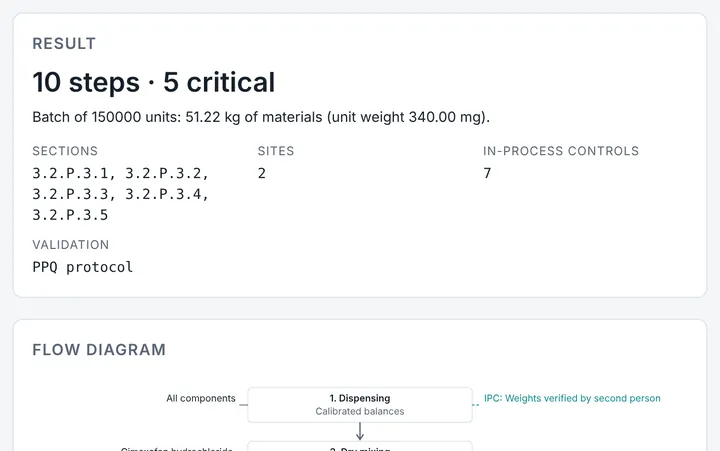
Manufacture, flow diagram, batch formula and process controls.
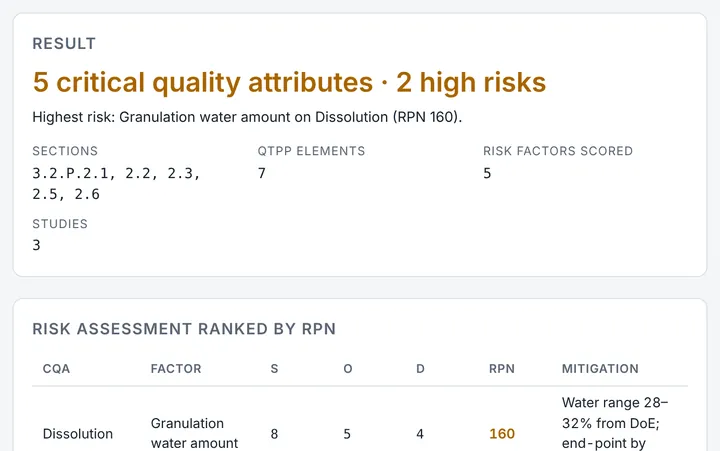
Pharmaceutical development with QTPP, CQAs and risk assessment.
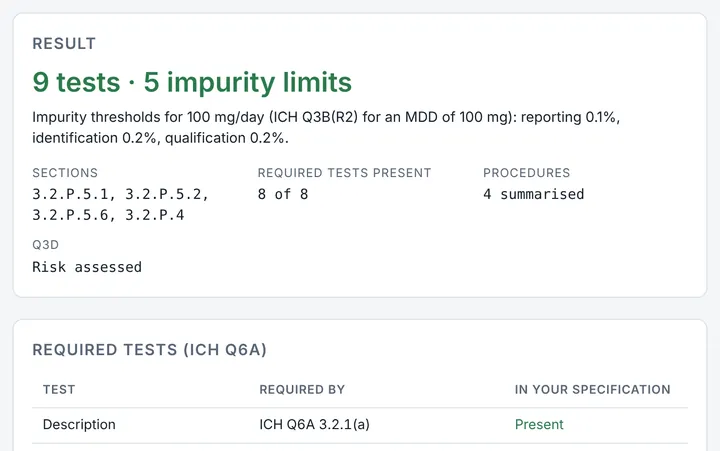
Drug substance and drug product specifications with justification.
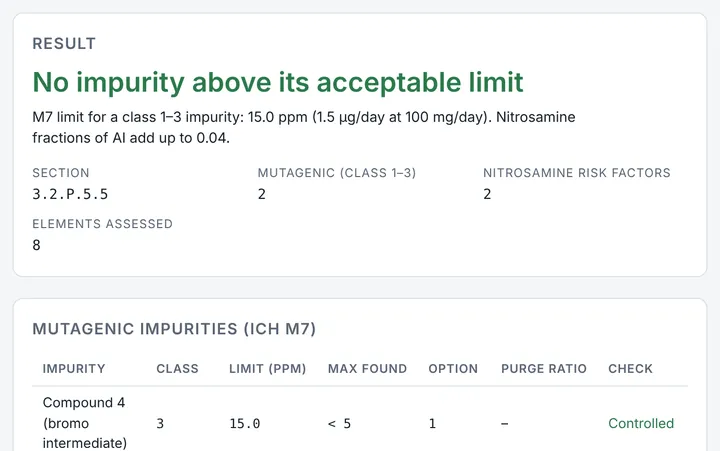
Characterisation, mutagenic impurities, nitrosamines and elemental impurities.
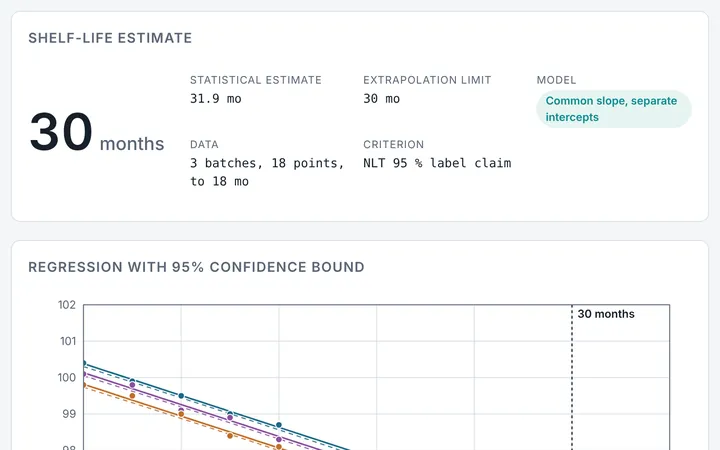
Shelf-life estimation and stability reports from long-term data.
Used for both
These modules apply to chemical and biological products. They switch their checks with the product type.
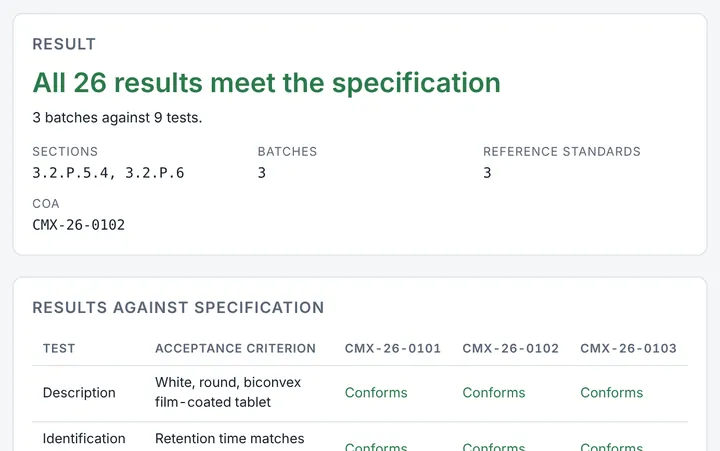
Batch results tables, discussion and certificates of analysis.
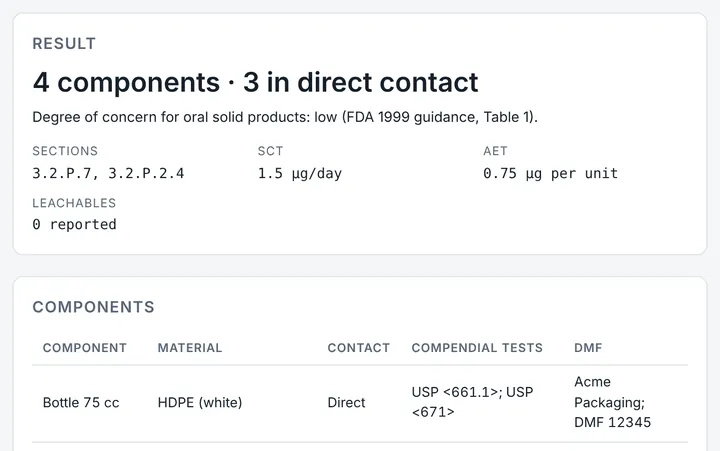
Packaging description, suitability and extractables and leachables.
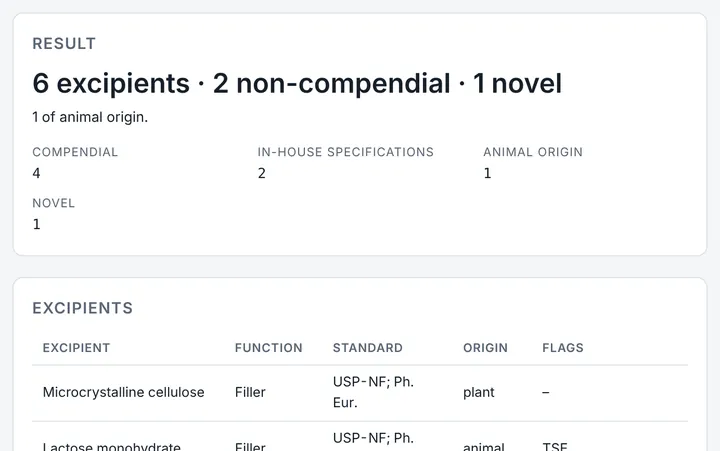
Control of excipients, from compendial grades to a full novel excipient package.
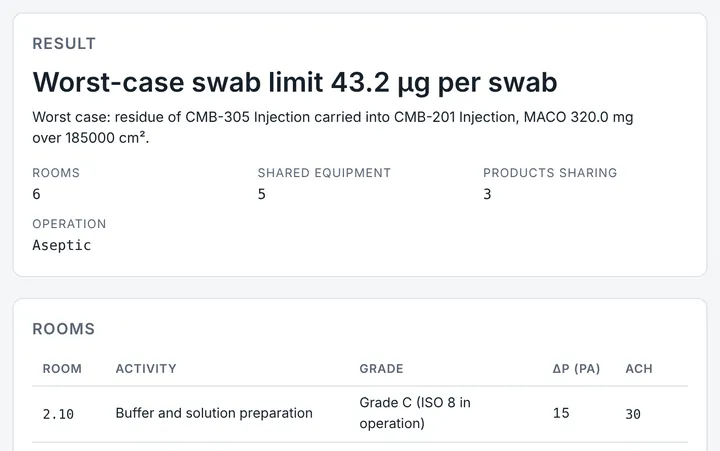
Facilities, cleanroom grades and shared equipment for 3.2.A.1.
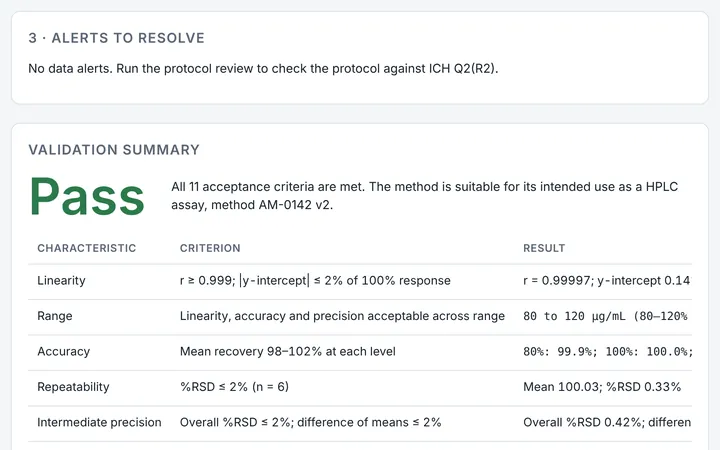
Validation protocols and reports for assay, impurity, dissolution and ID methods.
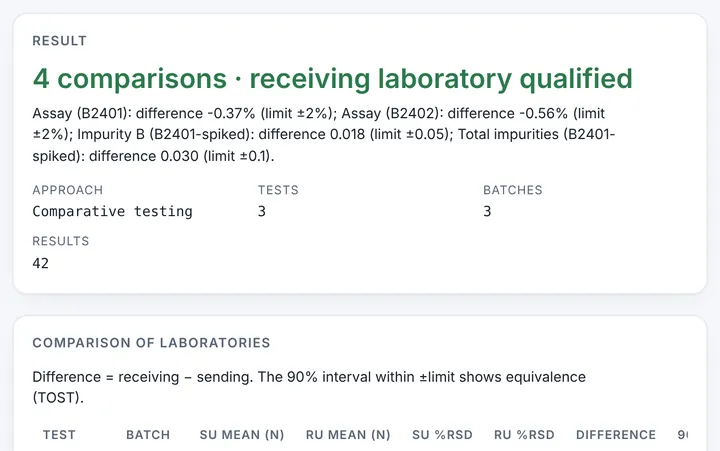
Analytical method transfer between laboratories, with the comparison worked out for you.
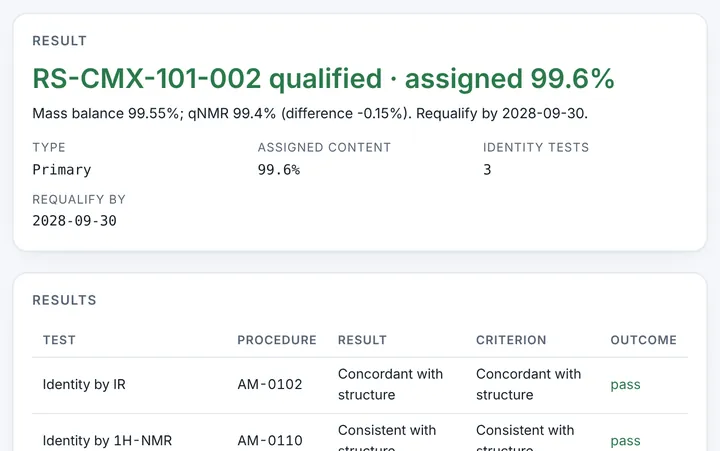
Qualify a primary or working reference standard and assign its content.
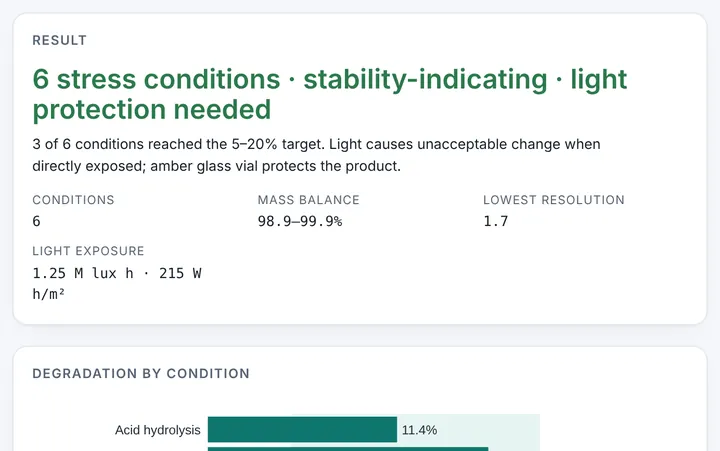
Stress testing and ICH Q1B photostability, with the stability-indicating conclusion.
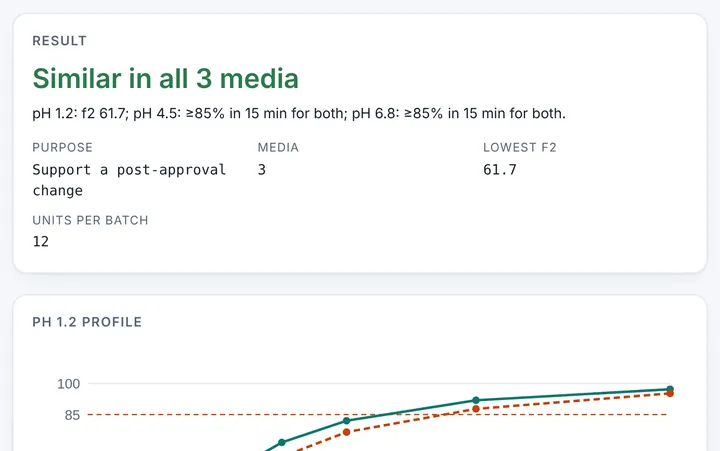
f2 similarity for changes, additional strengths and BCS biowaivers.
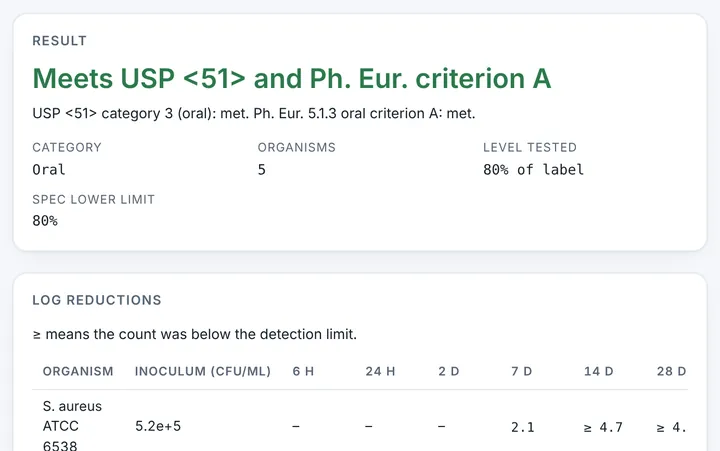
Antimicrobial effectiveness against USP <51> and Ph. Eur. 5.1.3.
Module 3 map
S.1General informationComposition & General InfoS.2Manufacture, route, starting materialsProcess & Controls WriterS.2Manufacture, cell banks, process validation, comparabilityBiologics Process WriterS.3Structure and impuritiesComposition · Impurity & Risk StudioS.3Characterisation (Q6B) and impuritiesBiologics CharacterisationS.4Specification and justificationSpecification BuilderS.4Specification with potency and K/M endotoxinBiologics CharacterisationS.4.2–4.3Procedures and validationMethod Validation StudioS.4.4 · S.5Batch analyses, reference standardsBatch Analysis & CoAS.6Container closureContainer Closure & E&LS.7StabilityStability StudioS.7Stability by Q5C: potency, aggregates, freeze-thawBiologics Stability StudioP.1Description and compositionComposition & General InfoP.2Pharmaceutical developmentDevelopment StudioP.3Manufacture, batch formula, flow diagramProcess & Controls WriterP.2 · P.3Formulation, fill-finish, media fills, devicesBiologics Drug Product WriterP.4Control of excipients, animal origin, novel excipientsExcipients WriterP.5Specification, procedures, batchesSpecification Builder · Batch AnalysisP.5Specification with particles, sterility, potencyBiologics CharacterisationP.7Container closure and E&LContainer Closure & E&LP.8Stability and commitmentsStability StudioP.8Stability, in-use and shipping studiesBiologics Stability StudioA.1Facilities, cleanroom grades, cleaning limitsFacilities & Equipment WriterA.2TSE/BSE statement for excipientsReport Reviewer checks itA.2Viral safety: Q5A(R2) clearance and retrovirus marginViral Safety StudioA.3Novel excipients: full data setExcipients WriterR · USExecuted batch records, method validation packageQOS ComposerR · EUProcess validation scheme, CEP/ASMF, deviceQOS Composer2.3Quality Overall Summary from every tool's summary fileQOS ComposerZipeCTD folder structure with all sectionsQOS ComposerCheckUpload any section, PDF or scan and see what is missingReport ReviewerReportsStability, validation, OOS, deviation, CAPAStudiosChangesPost-approval changes: US supplement or EU variation typeChange ClassifierSections in amber use the biologics rules: ICH Q5A(R2), Q5B, Q5C, Q5D, Q5E and Q6B.
Sections in amber use the biologics rules: ICH Q5A(R2), Q5B, Q5C, Q5D, Q5E and Q6B.
Paste a section into the Report Reviewer and read what it finds. Nothing you paste leaves your computer.